
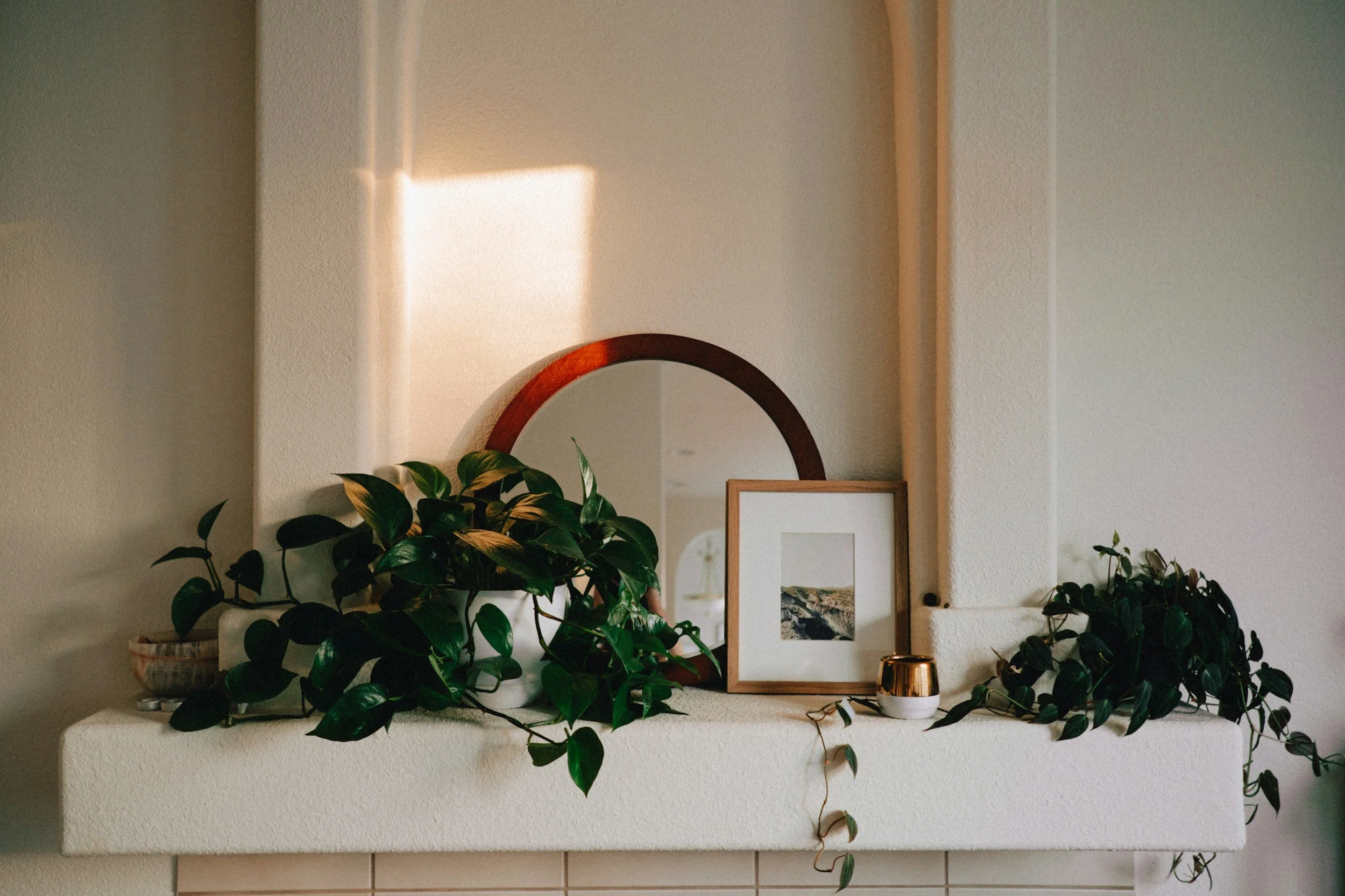
Your home should feel like something you walk into, not something you walk through.
All too often, we design spaces around aesthetics first, but your personal space should provide you with calm, clarity, and comfort, and be created with those intentions in mind.
One way to do that is to design your home around your nervous system. When you live somewhere that not only looks nice but also helps you feel grounded, held, and settled, your body will notice on a visceral level. Your shoulders will unfurl without effort upon waking up, and you’ll relish each space even deeper.
Of course, there’s no one-size blueprint for regulation. Your nervous system carries your unique story, memories and scars, so what feels grounding to you might feel stifling to someone else. So, the first thing to do is step back and take notice of the lights, textures and sounds that soothe you, just as well as what agitates you. With that raw feedback, you’re ready to create.
Let’s talk lighting
Light is the body’s earliest connection to space. Since natural light cues your circadian rhythm, you’ll want to work with it. Try positioning your bed and chairs to catch morning or evening sun, depending on when your body wakes and winds down. Sheer curtains come in handy if you want to diffuse brightness without deadening warmth. Always avoid overhead fluorescents, as they flatten space and spike tension, no matter how different nervous systems can be. Instead, layer light from floor and table lamps that feel warm and welcoming, whether that’s colored lighting or white LEDs.
Speaking of color
Certain colors have been proven to affect us psychologically by evoking learned associations and biological responses. Warm colors, such as red and yellow, generally boost energy, appetite, urgency and excitement (which is why so many fast-food places use these hues), while cool colors, like blue and green, induce calm.
Do this exercise before committing to a color scheme based on that couch you’re contemplating for your living room: Study a color wheel and describe how each color makes you feel in one to three words, as soon as you feel something (there are no wrong answers, and the quicker you are to name the feeling, the more genuine your response will be). Note the ones that make you feel most like you’d want to in your home, and test patches of paint on your wall at different times of day, and notice how you feel standing in front of them. Your own sensing is the map here.
Adding texture
If color is visual input, texture is tactile truth. Smooth glass can feel clean or cold, while velvet can feel luxurious or suffocating. Linen might read relaxed to one person, while you find it unfinished. Physically touch every surface you can in your home: countertops, floors, upholstery, blankets, pillows, cabinet handles, etc., and, like the color exercise, name one to three words that arise, such as “cozy” for plush pillows or “irritated” for burlap. Again, there are no wrong answers, and speed matters. The quicker you respond, the more honest the feedback.
Then get curious. Do you crave more softness in your daily life, or more structure? Does your body relax against nubby, imperfect fibers, or does it settle with smooth, tightly woven materials? Some nervous systems regulate through containment, such as firm mattresses, structured seating, and substantial wood. Others unwind through coziness, like cushions you can sink into, fabrics that drape along the floor, and rugs that soften each bare step.
Notice where you want to feel supported versus soothed. A dining chair might benefit from stability and an upright posture, while a reading nook might call for an oversized lounge and cotton throw blankets.
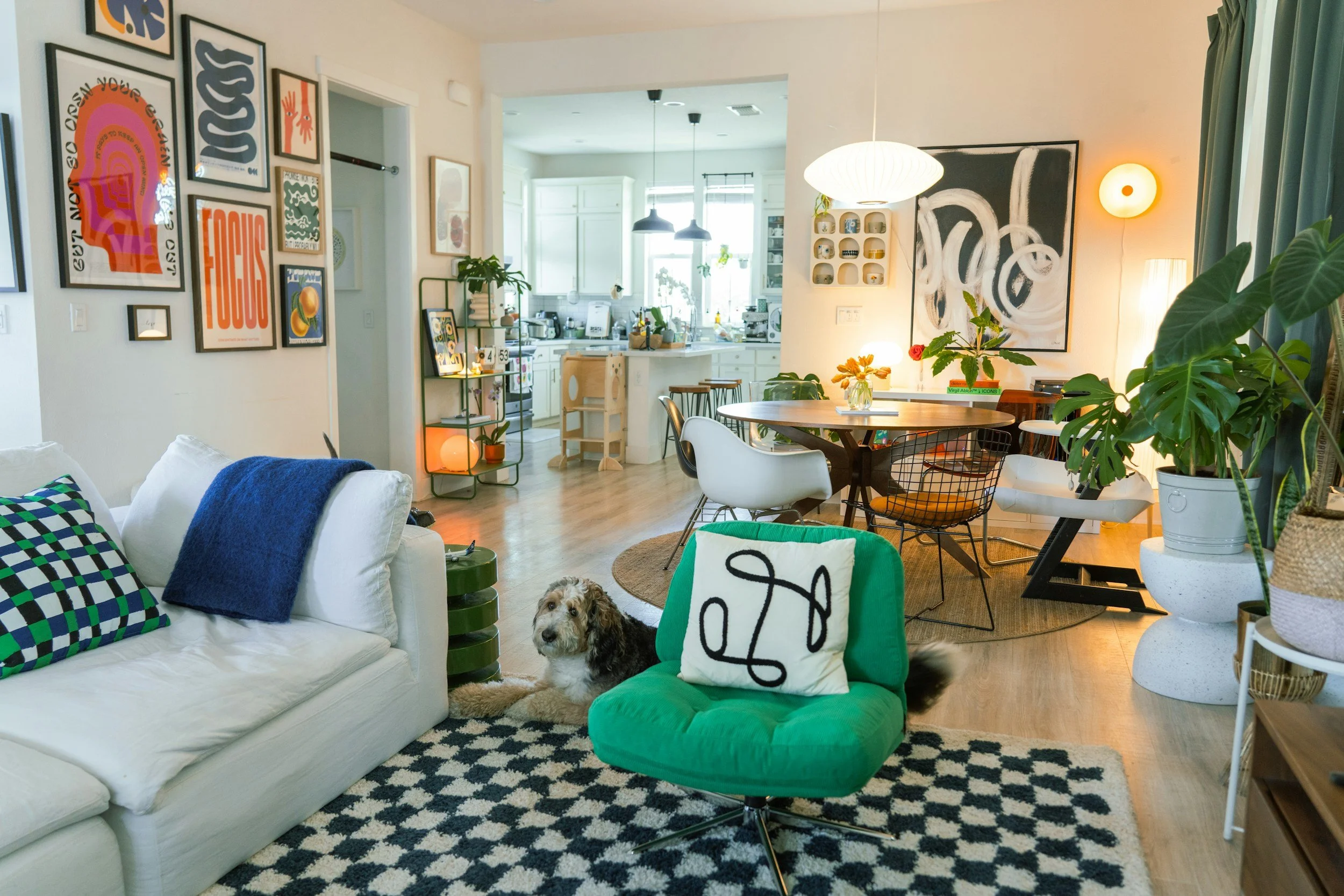
Create rhythm
Sound leaves a powerful impression on the nervous system. It’s why a sudden bang can make your heart race and a slow, melodic song can help you relax. Sound starts as physical vibrations in the air, otherwise known as sound waves, and once those waves hit your eardrum, thousands of tiny “hair cells” turn those vibrations into electrical signals. So, the soundtrack of your home is not one to be overlooked.
Bring in ambient noise that comforts you, whether it’s a discreet water foundation, quiet playlists that drift through rooms at gentle volume, or wind chimes you can hear just beyond the window. Get rid of anything producing noise that feels unsettling, like the tick of a clock or a creaky old chair.
Different rooms, different needs
Each space in your home serves its own function and therefore needs its own mood-boosting elements.
If your kitchen is the core site of regulation where nourishment is prepared and gathering with loved ones happens, position prep spaces accordingly so you can easily move through cooking steps without feeling trapped. Use utensils that feel good in your hands, and add an anchor element that signals what you want the room to represent. If it’s optimal health or green living, for instance, place a Kangen water machine in a prominent place to promote restorative, regular hydration that helps the planet. Make refilling your glass a moment of tending rather than a chore.
Your bedroom should reflect how you want to feel at the start and end of your day. You can do this by selecting sheets that are soft but supportive if you want warmth, pillows that cradle you if you’re craving being held, and removing clutter to feel mentally rested. Keep electronics away from your bed so it’s not associated with entertainment but deep, restorative sleep.
Parting thoughts
A regulated home does not mean a silent, sterile place untouched by life. It means a space that mirrors back what your nervous system genuinely needs. Let your home adapt to you, not the other way around, by creating an environment that always feels inviting to return to.
If you start with your body as the guest of honor, design becomes an act of listening rather than trendy performance. Your home is a shelter that, when designed right, feeds your soul.